1070 W Horizon Ridge Pkwy #121, Henderson, NV 89012

Everything You Need To Know About Dental Crowns
March 3, 2021

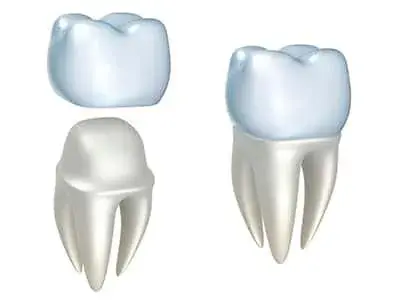
If you are looking to save a tooth that has been severely damaged, you may be discussing dental crowns with us soon. A dental crown is a cap that is placed on top of a damaged tooth. This cap is tooth-shaped and is used to cover, protect, and restore the function and appearance of teeth.
What is a Dental Crown?
A dental crown is a prosthetic restoration that is placed over a damaged or decayed tooth to restore its shape, size, strength, and appearance. It is custom-made to fit snugly over the prepared tooth, covering the entire visible portion above the gum line. Dental crowns can be made from various materials, including porcelain, ceramic, metal alloys, or a combination of materials, depending on the specific needs and preferences of the patient. Crowns are commonly used to strengthen weakened teeth, restore severely decayed or damaged teeth, cover dental implants, improve the appearance of misshapen or discolored teeth, and provide support for dental bridges.
When Is A Dental Crown Needed?
Dental crowns are needed to:
- Cap a decayed or damaged tooth
- Protect teeth after a dental implant
- Protect teeth after a root canal treatment
- Hold together a tooth that is cracked
- Hold dental bridges in place
- Improve discolored teeth
Depending on your specific situation, at Joshua M. Ignatowicz DMD & Associates, Joshua M. Ignatowicz, DMD, DICOI, and Dr. Gustavo Hernandez, DMD will suggest a crown material from the following crown types:
- Ceramic
- Porcelain fused to metal
- Porcelain
- Metal
Dental Crown Preparation
We conduct a few steps to assess and trim your tooth for a dental crown. Patients who have deep cavities need to have a root canal treatment performed first. In addition, if there isn’t much of the original tooth left above the gum line, we might use a filler material to build a foundation for the dental crown.
Under normal circumstances, getting a crown requires a minimum of two visits. During the first appointment, we might trim your tooth down so that the dental crown can fit comfortably. A dental impression is then taken for the formation of the crown.
A temporary crown is then fitted on the tooth. Lastly, the dental laboratory uses the impression to make the final crown. At your next appointment, our dentist will remove the temporary crown and replace it with a permanent one.
Once the crown is in place, you might experience some sensitivity, which often means that the crown needs further adjustment. Make sure to brush and floss regularly so that your gum line and crown remain healthy and in optimal condition.
To schedule an appointment with us and benefit from high-quality dental services, contact us today at 702-473-5100.
Recent Blog Post
How to Achieve a Natural-Looking Smile With Cosmetic Dentistry
Most people considering cosmetic dentistry share one quiet fear: What if I end up with teeth that look fake? You’ve probably seen it the overly white, perfectly uniform smile that somehow looks more like a dental display model than a real person. It’s a valid concern, and it holds many people back from seeking the smile improvements they genuinely want
Sleep Apnea Left Untreated: What Your Body Pays the Price
Untreated sleep apnea costs your body more than sleep. Learn the risks and how Dr. Ignatowicz helps Henderson patients breathe better and live healthier.
Why Delaying a Dental Bridge Costs You More Than Money
Delaying a dental bridge in Henderson costs more than money. Learn how tooth loss affects your health, bite, and smile. Book with Dr. Ignatowicz today.
